
Why Professional Waterproofing Is the Most Effective Mold Prevention Strategy in Seattle Area
Key Takeaways
- Moisture control is the key to mold control according to EPA and CDC guidelines
- Waterproofing addresses the root cause of mold growth rather than treating symptoms after they appear
- Seattle’s climate with 150-plus rainy days annually makes basement moisture a year-round threat
- Mold can begin growing within 24 to 48 hours after water exposure creates damp conditions
- Professional basement waterproofing provides permanent moisture control that prevents mold colonization
- Surface cleaning removes visible mold but does nothing to prevent recurrence without moisture elimination
- Health effects from mold exposure include respiratory problems, allergic reactions, and asthma complications
- Proper waterproofing systems manage groundwater before it enters basements and creates mold conditions
- Long-term mold prevention requires fixing water problems at their source, not just managing consequences
After working with Seattle area homeowners for over four decades, we’ve seen every approach to mold problems imaginable. Homeowners try bleach treatments, dehumidifiers, air purifiers, mold-resistant paint, and countless other solutions promising to eliminate their mold issues. Some of these approaches provide temporary relief. Most fail within months. The reason? They’re treating symptoms rather than addressing the fundamental cause of indoor mold growth: moisture.
The science is clear and consistent. According to the U.S. Environmental Protection Agency, the key to mold control is moisture control. The Centers for Disease Control and Prevention emphasizes the same principle. If you eliminate moisture, you eliminate mold’s ability to grow. And in Seattle basements, where groundwater pressure, rainfall infiltration, and high humidity create perfect conditions for mold colonization, professional waterproofing represents the single most effective prevention strategy available.
At Wet Basement Services, we don’t just remove mold. We eliminate the moisture conditions that allow mold to exist in the first place. This distinction matters more than most homeowners initially realize.
Understanding the Mold and Moisture Connection
Mold exists everywhere in our environment. Spores float through the air constantly, both indoors and outdoors. This isn’t a problem. Mold plays important ecological roles in nature, breaking down dead organic matter. The problem begins when mold spores encounter the specific conditions they need to colonize and multiply: moisture, organic material to feed on, appropriate temperature, and time.
EPA guidance confirms that mold spores will not grow if moisture is not present. Remove moisture from the equation and mold cannot establish itself, regardless of how many spores are present. This fundamental principle underlies our entire approach to mold control in Seattle area homes.
The 24 to 48 Hour Window
According to EPA standards, water-damaged areas and items must be dried within 24 to 48 hours to prevent mold growth. This narrow window reflects how quickly mold can establish itself when conditions are right. Once 48 hours pass with materials remaining damp, mold colonization likely has begun, even if it’s not yet visible.
In Seattle basements where moisture infiltration happens repeatedly during our long rainy season, this 24 to 48 hour window presents a serious challenge. Homeowners cannot constantly monitor their basements, and many moisture problems develop in hidden spaces behind walls, under floors, or in crawlspaces. By the time visible mold growth appears, the problem has typically existed for weeks or months.
Professional basement waterproofing eliminates this cycle entirely. When moisture never enters the basement in the first place, the 24 to 48 hour window becomes irrelevant. There’s no damp period for mold to exploit.
Why Surface Treatments Fail
The most common mistake homeowners make is focusing on visible mold rather than the moisture creating it. We regularly receive calls from homeowners who have cleaned mold from their basement walls multiple times, only to see it return within weeks or months. They’ve tried bleach solutions, antimicrobial sprays, and mold-resistant coatings. Nothing provides lasting results.
These approaches fail because they address the consequence rather than the cause. Cleaning kills or removes existing mold, but it does nothing to prevent moisture from continuing to enter the basement. As long as moisture infiltration continues, new mold spores will land on damp surfaces and begin the colonization process again. The EPA explicitly states that if you clean up mold but don’t fix the water problem, the mold problem will most likely return.
This pattern creates frustration and false conclusions. Homeowners conclude that mold is impossible to control in Seattle’s climate. They resign themselves to constant vigilance and repeated cleaning. Some give up and simply avoid using their basements. None of this is necessary when the underlying moisture problem is properly addressed through professional waterproofing.
How Seattle’s Climate Creates Mold Conditions
Seattle’s Pacific Northwest climate presents unique challenges for basement moisture control. With more than 150 rainy days annually, extended periods of seasonal rainfall, high groundwater tables throughout many neighborhoods, and year-round humidity levels frequently exceeding 70 percent, the region creates nearly perfect conditions for basement moisture problems.
This moisture doesn’t just disappear between rain events. It accumulates in the soil surrounding home foundations, creating constant hydrostatic pressure against basement walls and floors. Over time, this pressure forces water through microscopic pores in concrete, through cracks in foundation walls, and through the cold joint where walls meet floors.
The water entering through these pathways brings humidity, dampness, and direct moisture that creates ideal mold growth conditions. Common basement materials including drywall, wood framing, carpet, cardboard, and paper all provide the organic matter mold needs to feed and multiply. Add Seattle’s moderate temperatures, and basements become mold incubators without proper moisture control.
The Professional Waterproofing Advantage
Professional waterproofing systems approach moisture control fundamentally differently than surface treatments or symptom management. Rather than responding to moisture after it enters the basement, comprehensive waterproofing prevents moisture infiltration at its source.
Interior Waterproofing Systems
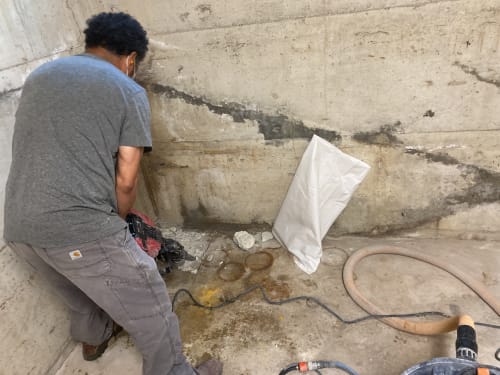
Our interior waterproofing approach manages groundwater before it creates problems inside the basement. The EWA (Extreme Water Abandonment) system we install intercepts water at the foundation footings, the lowest point where moisture enters. Drainage systems capture this water and direct it to sump pumps that remove it from the property entirely.
This approach addresses the fundamental problem: water under hydrostatic pressure seeking entry into the basement. By relieving this pressure and redirecting groundwater away from the foundation, interior waterproofing eliminates the moisture source that enables mold growth. Basements remain consistently dry regardless of Seattle’s weather patterns or seasonal groundwater fluctuations.
Exterior Waterproofing Solutions
For properties where exterior access is practical, exterior waterproofing provides another comprehensive moisture control approach. This method involves excavating around foundation walls, applying waterproof membranes directly to exterior wall surfaces, installing drainage systems at footing level, and creating proper grading that directs surface water away from the foundation.
Exterior waterproofing prevents moisture from contacting foundation walls in the first place. Combined with proper drainage at the footing level, this approach eliminates the pathways through which moisture would otherwise enter basements. The result is permanent moisture control that makes mold growth impossible.
Why Comprehensive Systems Work
Both interior and exterior waterproofing share a critical characteristic: they address the complete moisture pathway rather than isolated symptoms. Moisture enters basements through multiple routes including wall penetration, floor infiltration, cold joint seepage, window well leakage, and foundation cracks. Effective mold prevention requires addressing all these pathways simultaneously.
This comprehensive approach distinguishes professional waterproofing from partial solutions. Sealing one crack doesn’t prevent water from finding another entry point. Installing a dehumidifier doesn’t stop water infiltration. Applying waterproof coating to walls doesn’t address moisture coming through floors. Only systems-based waterproofing eliminates the moisture problem completely.
Health Benefits of Preventing Mold Growth
The importance of mold prevention extends far beyond property concerns. According to CDC guidance, exposure to damp and moldy environments can cause various health effects. For some people, mold exposure causes stuffy nose, sore throat, coughing or wheezing, burning eyes, and skin rash. People with asthma or mold allergies may experience severe reactions. Immune-compromised individuals and those with chronic lung disease face risk of lung infections from mold exposure.
These health risks affect families daily when mold problems exist in homes. Children, elderly family members, and anyone with respiratory sensitivities face particular vulnerability. The musty basement smell that many Seattle homeowners accept as normal actually indicates active mold growth releasing spores and volatile organic compounds into home air.
Professional waterproofing eliminates these health risks by preventing the moisture conditions that enable mold growth. Families can use basements safely, store belongings without mold damage concerns, and breathe easier knowing their indoor air quality isn’t compromised by basement mold colonization.
Long-Term Prevention Versus Short-Term Management
The difference between waterproofing and other mold approaches ultimately comes down to timeframe and effectiveness. Surface cleaning provides temporary removal of visible mold but requires repeated application as moisture continues creating new growth. Dehumidifiers reduce humidity but cannot prevent water infiltration and require constant operation with associated energy costs. Antimicrobial treatments may slow mold growth but lose effectiveness as moisture continues entering the space.
Professional waterproofing provides permanent moisture elimination. Once properly installed, comprehensive waterproofing systems continue preventing moisture infiltration indefinitely. The lifetime transferable warranty we provide with our installations reflects this permanence. We’re confident that moisture control through proper waterproofing remains effective for decades because we’ve seen our systems perform throughout Seattle’s wettest seasons and most challenging groundwater conditions.
This permanence transforms how families relate to their basements. Rather than avoiding basement space or accepting mold as inevitable, homeowners can finish basements, create living spaces, store valuable items, and use the full square footage of their homes without concern. The initial investment in professional waterproofing eliminates the ongoing cycle of mold removal, material replacement, and health concerns that characterize untreated moisture problems.
The Cost of Inadequate Prevention
Homeowners sometimes hesitate at waterproofing investment, particularly if current mold problems seem manageable through cleaning. This perspective overlooks the cumulative costs of inadequate prevention. Repeated mold remediation expenses, damaged belongings requiring replacement, health effects requiring medical attention, decreased home value due to moisture problems, and energy costs from constant dehumidifier operation all represent ongoing expenses that professional waterproofing eliminates.
More significantly, mold-caused structural damage escalates over time. Wood framing deteriorates when repeatedly exposed to moisture and mold. Concrete foundations weaken through constant moisture exposure. Drywall and insulation require replacement when mold contamination becomes extensive. Addressing these issues after years of moisture problems costs substantially more than preventing them through proper waterproofing from the outset.
Why We Focus on Root Cause Solutions
Everything we do at Wet Basement Services centers on addressing root causes rather than managing symptoms. This philosophy developed through decades of experience watching partial solutions fail and seeing the relief homeowners experience when moisture problems are truly resolved.
When we inspect a Seattle basement with mold problems, we’re not focused on the mold itself. We’re identifying every pathway through which moisture enters the space. We’re evaluating groundwater levels, foundation construction, drainage conditions, and soil characteristics. We’re determining what comprehensive system will eliminate moisture infiltration permanently.
This approach requires more extensive assessment than surface mold removal. It involves more comprehensive installation than spot repairs or partial fixes. It represents a larger investment than temporary solutions. But it provides what Seattle homeowners actually need: permanent moisture control that makes mold prevention automatic rather than requiring constant attention.
Making the Investment in Long-Term Protection
If you’re dealing with recurring mold problems in your Seattle area basement, we encourage you to think beyond immediate symptom management. Consider what your basement could be if moisture never entered the space. Imagine using that square footage without concern about mold exposure, musty odors, or damaged belongings. Think about the peace of mind that comes from knowing your family’s health isn’t compromised by basement mold growth.
Professional waterproofing makes these outcomes reality. It’s not the least expensive approach to mold issues, but it’s the only approach that provides permanent prevention. Every other solution requires ongoing effort, repeated costs, and acceptance of continuing risk. Waterproofing requires one comprehensive installation and then provides decades of reliable moisture control.
Contact Wet Basement Services for a thorough assessment of your basement moisture conditions. We serve homeowners throughout Seattle, Bellevue, Redmond, Kirkland, Bothell, Issaquah, Sammamish, and all surrounding Puget Sound communities. Our inspections identify moisture sources, evaluate mold risk, and recommend comprehensive waterproofing solutions designed specifically for your property’s conditions. Let us show you why moisture control through professional waterproofing remains the most effective mold prevention strategy available to Seattle area homeowners.