
Signs Your Seattle Basement Waterproofing Is Failing
Many Seattle homeowners assume that once basement waterproofing has been installed, their water problems are solved permanently. Unfortunately, waterproofing systems can and do fail over time. Exterior coatings deteriorate, drainage pipes become clogged, sump pumps malfunction, and foundation settlement creates new cracks that bypass even the most robust waterproofing.
The good news is that failing waterproofing systems rarely fail suddenly without warning. Most failures develop gradually over months or years, producing clear signs that alert homeowners to problems before catastrophic flooding occurs. Recognizing these warning signs early allows you to address waterproofing failures before they cause extensive water damage, structural problems, or dangerous mold growth.
Understanding what to watch for helps you protect your Seattle area home from the serious consequences of waterproofing failure. This guide covers the most common and important indicators that your basement waterproofing is no longer functioning properly.
Water Stains and Discoloration on Walls
One of the earliest and most obvious signs of waterproofing failure is the appearance of water stains or discoloration on basement walls. These stains typically appear as dark patches, streaks, or rings on concrete or finished wall surfaces. The discoloration occurs when water carries minerals, dirt, and other dissolved materials through foundation walls and deposits them on interior surfaces.
Fresh water stains appear dark and wet. As they dry, they often leave behind lighter colored residue or distinct lines that mark the high water point. Multiple stain lines at different heights indicate repeated water intrusion events, with each line representing a separate occurrence when water penetrated to that level.
The location of water stains provides valuable information about the source of water entry. Stains near the top of basement walls may indicate surface water problems, inadequate grading, or ineffective gutters allowing water to saturate soil near the foundation. Stains at mid-wall height often result from failing exterior waterproofing or deteriorated foundation coatings. Stains near the floor suggest groundwater pressure and problems with footing drains or subsurface drainage.
According to the Environmental Protection Agency, any visible water stains in basements should be investigated immediately because they indicate ongoing moisture problems that can quickly lead to mold contamination and structural damage.
Efflorescence on Concrete Surfaces
Efflorescence appears as white, powdery, or crystalline deposits on concrete basement walls and floors. This substance forms when water moves through concrete, dissolves mineral salts within the material, and then evaporates on the surface, leaving the minerals behind as a white residue.
While efflorescence itself is not harmful, it serves as a clear indicator that water is actively moving through your foundation. The presence of efflorescence means your waterproofing is allowing moisture penetration even if you do not see standing water or obvious leaks.
Fresh efflorescence has a fluffy, crystalline appearance and can often be brushed away easily. Older deposits become harder and more tightly bonded to the concrete surface. Heavy efflorescence that repeatedly reappears after cleaning indicates persistent moisture problems and significant waterproofing failure.
The amount and distribution of efflorescence helps diagnose the severity of waterproofing problems. Light, scattered deposits suggest minor moisture penetration that may respond to targeted repairs. Heavy, widespread efflorescence covering large wall sections indicates major waterproofing failure requiring comprehensive solutions.
Efflorescence often appears in conjunction with other failure signs like damp spots, water stains, or musty basement smells. This combination confirms that active water intrusion is occurring and your waterproofing system is no longer providing adequate protection.
Visible Mold Growth
Mold growth in basements clearly indicates moisture levels are too high and waterproofing is not adequately controlling dampness. Mold requires moisture to grow, so its presence confirms that water is entering your basement even if you cannot identify the specific entry point.
Basement mold typically appears as black, green, white, or brown spots or patches on walls, floors, ceiling joists, insulation, stored items, or any organic material. The mold may be fuzzy, slimy, or powdery depending on the species and growth stage. Some mold growth occurs in hidden locations like behind finished walls, under carpeting, or in wall cavities, making it difficult to detect until contamination is extensive.
According to the Centers for Disease Control and Prevention, mold exposure can cause respiratory problems, allergic reactions, and other health issues, making prompt remediation essential when mold appears in your home.
Mold growth patterns provide clues about waterproofing failure locations. Mold concentrated near the floor suggests water intrusion through the wall-floor joint or rising through the floor slab. Mold growth on lower wall sections indicates water penetration through foundation walls. Mold on ceiling joists and rim joists may result from basement condensation caused by excessive moisture in the basement environment.
If you discover mold in your basement, addressing the underlying waterproofing failure is essential. Simply removing visible mold without fixing the moisture source guarantees the mold will return. At Wet Basement Services, we provide integrated solutions that combine professional mold remediation with permanent moisture control to eliminate both the mold and the conditions that allowed it to grow.
Persistent Musty Odors
A persistent musty, damp, or earthy smell in your basement indicates elevated moisture levels even when you cannot see visible water or mold. This distinctive odor comes from mold spores, mildew, and microbial growth that thrive in humid conditions.
The musty smell often becomes more noticeable after periods of heavy rain or during Seattle’s wet season when groundwater levels rise and hydrostatic pressure increases. If the odor intensifies during wet weather, it strongly suggests your waterproofing system is allowing increased moisture penetration when water pressure is highest.
Musty odors that permeate the entire basement indicate widespread moisture problems rather than isolated leaks. This suggests your waterproofing system is failing comprehensively rather than at a single point. The smell may also migrate from the basement into upper floors through the stack effect, where air from lower levels rises through the home and carries basement odors throughout your living spaces.
Do not ignore musty basement smells or attempt to mask them with air fresheners or dehumidifiers alone. These odors indicate active moisture problems that will worsen over time without proper waterproofing repairs. The longer you delay addressing the underlying failure, the more extensive the water damage and mold contamination will become.
Damp or Wet Floors
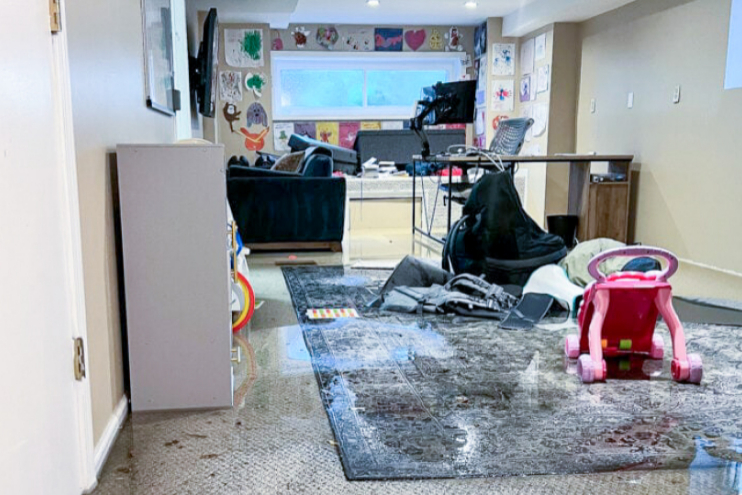
Wet floors or persistent dampness on basement floor surfaces clearly indicate waterproofing failure. Water on basement floors can result from several failure modes, each requiring different repair approaches.
Standing water or puddles that appear during or after rain suggest acute waterproofing failure allowing significant water entry. The location where water accumulates helps identify entry points. Water pooling along walls indicates seepage through foundation walls or failure of the wall-floor joint. Water appearing in the center of the floor suggests rising groundwater pressure forcing water up through the concrete slab.
Damp floors that never fully dry indicate chronic moisture problems even without visible standing water. This persistent dampness may result from capillary action drawing moisture up through porous concrete, high humidity condensing on cool floor surfaces, or slow seepage that evaporates as quickly as it enters but maintains constant moisture on the floor.
Condensation forming on basement floors during warm, humid weather can indicate waterproofing problems even though the water source is atmospheric rather than groundwater. If your basement floor sweats heavily or puddles form from condensation, it suggests inadequate moisture control and ventilation that often accompanies waterproofing system failures.
Water entering through water in cold joints where the floor meets the walls is extremely common in Seattle basements with failing waterproofing. This joint represents a natural weak point where hydrostatic pressure can force water entry when exterior waterproofing deteriorates or interior drainage systems fail.
Increasing Humidity Levels
Rising humidity levels in your basement can signal failing waterproofing even before visible water appears. Basements should maintain relative humidity between 30 and 50 percent for healthy, dry conditions. Humidity consistently above 60 percent indicates moisture is entering faster than it can be removed through ventilation or dehumidification.
You can monitor basement humidity with inexpensive hygrometers available at hardware stores. Check humidity levels at different times and in different basement locations to understand moisture patterns. Humidity that spikes during rainy periods or stays elevated year-round suggests waterproofing is not adequately controlling moisture entry.
High humidity creates multiple problems beyond indicating waterproofing failure. It promotes mold growth, causes musty odors, damages stored belongings, and makes basements feel uncomfortable and unhealthy. The same moisture that elevates humidity often indicates conditions that will eventually progress to visible water intrusion if waterproofing failures are not addressed.
Dehumidifiers can temporarily control humidity but they do not fix waterproofing failures. If you find yourself constantly running dehumidifiers or emptying their collection tanks multiple times daily, your waterproofing system is failing to prevent moisture entry. The dehumidifier is treating symptoms rather than solving the underlying problem.
Visible Cracks in Foundation Walls or Floors
New cracks appearing in basement walls or floors, or existing cracks that widen over time, indicate foundation movement that can compromise waterproofing systems. Even hairline basement wall cracks provide pathways for water entry under hydrostatic pressure.
Horizontal cracks in basement walls are particularly concerning because they often indicate serious structural problems with the foundation bowing inward under soil pressure. These cracks typically allow significant water intrusion and require both structural repair and comprehensive waterproofing.
Vertical cracks commonly result from foundation settlement or concrete shrinkage during curing. While less structurally serious than horizontal cracks, they still allow water penetration and indicate waterproofing has been breached. Diagonal cracks that run at angles across walls often result from differential settlement where one part of the foundation moves more than another.
Floor cracks frequently appear in basement slabs due to settlement, soil movement, or inadequate reinforcement during construction. Water entering through floor cracks indicates rising groundwater pressure that waterproofing and drainage systems are not controlling. Water flowing from floor cracks during heavy rain shows subsurface drainage has failed and hydrostatic pressure is forcing water up through the slab.
Cracks that leak water actively during wet weather require immediate attention. The water intrusion indicates not only that the crack exists but that waterproofing around it has failed and water pressure is sufficient to drive flow through the opening. Delaying repairs allows more water entry and typically results in crack widening that worsens the problem.
Sump Pump Running Constantly or Not at All
Sump pump behavior provides important clues about waterproofing system performance. A properly functioning system in Seattle should activate periodically during wet weather to remove collected groundwater, then shut off when the sump basin is empty.
A sump pump that runs constantly without shutting off indicates it cannot keep up with water inflow. This suggests either the pump is undersized for current water volumes, the drainage system is collecting more water than expected due to waterproofing failures elsewhere, or the pump itself is failing and cannot discharge water efficiently.
Check the discharge line to ensure water is actually flowing out when the pump runs. A pump that runs continuously but discharges little or no water has mechanical problems requiring immediate replacement. A functioning pump overwhelmed by excessive water inflow indicates waterproofing failures are allowing too much water entry.
Conversely, a sump pump that never runs despite wet weather and moisture problems suggests the drainage system feeding the pump has failed. Clogged drainage pipes, crushed or collapsed drain lines, or sediment-filled drainage channels prevent water from reaching the sump basin. The water still enters your basement but bypasses the collection system and appears as wet walls, damp floors, or seepage in areas away from the sump location.
Listen for unusual noises from your sump pump like grinding, rattling, or labored operation. These sounds indicate mechanical wear that will soon lead to pump failure. Test your pump regularly by pouring water directly into the basin and confirming it activates properly and discharges fully.
Peeling Paint or Wallpaper
Paint peeling off basement walls or wallpaper separating from walls indicates moisture is penetrating from behind and preventing proper adhesion. This moisture typically results from water moving through foundation walls due to waterproofing failure.
Fresh paint or wallpaper installed over damp walls initially adheres but soon begins bubbling, peeling, or separating as moisture continues entering from the exterior. The paint or wallpaper essentially traps moisture against the wall, accelerating deterioration and often promoting mold growth behind the covering.
Peeling concentrated in lower wall sections suggests water is wicking up from the floor or entering through the wall-floor joint. Peeling at mid-wall height indicates water penetration through the foundation wall itself. Widespread peeling across large wall areas confirms major waterproofing failure allowing moisture intrusion throughout the basement envelope.
Do not simply repaint or replace wallpaper when peeling occurs. The cosmetic treatment will fail again until the underlying waterproofing problem is fixed. In fact, sealing walls with paint or coverings before addressing moisture intrusion can worsen problems by trapping water inside wall assemblies where it promotes rot, corrosion, and mold growth.
Rust on Metal Items or Fixtures
Rust appearing on metal items stored in your basement, on metal basement fixtures like furnaces and water heaters, or on exposed pipes and ductwork indicates elevated moisture levels resulting from waterproofing failure. While some humidity is normal in basements, moisture sufficient to cause rust indicates conditions well beyond healthy levels.
Metal items that previously remained rust-free developing corrosion suggests moisture conditions have changed. This change likely reflects degrading waterproofing that is allowing increased moisture entry. The speed at which rust develops indicates the severity of the moisture problem.
Pay particular attention to rust on mechanical equipment like furnaces, water heaters, and HVAC components. Beyond indicating waterproofing failure, this rust can cause equipment malfunctions and safety hazards. Rusting metal also suggests humidity is high enough to support mold growth and wood rot even if these problems are not yet visible.
Rotting Wood and Structural Damage
Wood rot in basement structural members like floor joists, sill plates, support posts, or wall framing indicates serious waterproofing failure that has allowed sustained moisture exposure. Wood rot develops when moisture content in wood exceeds 20 percent for extended periods, providing conditions for decay fungi to grow.
Early wood rot may appear as darkening or softening of wood. Advanced rot causes wood to become spongy, crumble when pressed, or develop fungal growth. Structural wood rot compromises your home’s integrity and can lead to sagging floors, wall collapse, or other catastrophic failures if not addressed promptly.
Wood rot commonly develops in rim joists and sill plates near the top of basement walls where they meet first floor framing. This location is vulnerable to moisture from wet drywall, condensation, and water wicking up through foundation walls. It also receives less air circulation than other basement areas, keeping damp wood from drying.
Discovering wood rot requires immediate action. The rot itself must be repaired or the affected wood replaced. More importantly, the waterproofing failures allowing moisture accumulation must be corrected permanently. At Wet Basement Services, we address both the immediate damage and the underlying causes through comprehensive waterproofing and structural repair.
When to Call Waterproofing Professionals
If you notice any of these warning signs, do not delay seeking professional assessment. Early intervention when waterproofing begins failing prevents minor problems from becoming major disasters. Small leaks that could be fixed with targeted repairs if caught early often require complete system replacement if ignored until damage is extensive.
Professional waterproofing contractors can diagnose the specific causes of system failure and recommend appropriate solutions. At Wet Basement Services, our free inspections identify all signs of waterproofing failure, determine root causes, and provide detailed explanations of necessary repairs.
We understand that waterproofing systems fail for many reasons. Exterior coatings deteriorate over decades of exposure to moisture and soil chemistry. Drainage pipes clog with sediment or become crushed under soil weight. Sump pumps wear out from years of operation. Foundation movement creates new cracks that bypass original waterproofing. Our experience with thousands of Seattle area basements allows us to quickly identify failure modes and design solutions that address specific problems.
Many waterproofing failures result from systems that were inadequate from the start rather than from deterioration of properly designed systems. Homes built before modern waterproofing standards often have minimal protection that cannot handle Seattle’s challenging conditions. Our comprehensive approach provides the permanent protection these homes need through properly engineered interior waterproofing systems.
The Risks of Ignoring Failing Waterproofing
Delaying waterproofing repairs allows problems to worsen exponentially rather than linearly. A small amount of water entering through a minor crack will, over time, erode surrounding concrete and widen the crack. Moisture that promotes minor mold growth will, if unchecked, spread contamination throughout the basement. Humidity that damages stored items will eventually cause structural rot in framing members.
The financial cost of repairs increases dramatically with delay. A relatively inexpensive crack repair becomes a costly floor replacement when water undermines the slab. A simple drainage system installation becomes a major mold remediation project when moisture problems are ignored. Foundation repairs that could have been avoided become necessary when water damage weakens structural elements.
Health risks also escalate with delay. Mold contamination that begins in isolated areas spreads throughout the basement and into upper floors. Family members develop respiratory problems, allergies, and other health issues from ongoing mold exposure. The longer you wait to address failing waterproofing, the greater the health risks become.
Protecting Your Seattle Home
Seattle’s challenging climate and geology mean basement waterproofing systems work hard year-round to keep water out. Regular monitoring for signs of failure allows you to address problems promptly and maintain effective protection.
Wet Basement Services has spent decades solving waterproofing failures throughout the Seattle area. We provide honest assessments of system condition and recommend only necessary repairs. Our proprietary EWA System provides permanent basement waterproofing designed specifically for Pacific Northwest conditions, backed by our lifetime warranty.
Do not wait for minor warning signs to become major flooding events. Contact Wet Basement Services today to schedule your free inspection and ensure your basement waterproofing is protecting your home effectively. Our experienced team will identify any signs of failure and provide solutions that keep your Seattle area basement dry and healthy for life.