
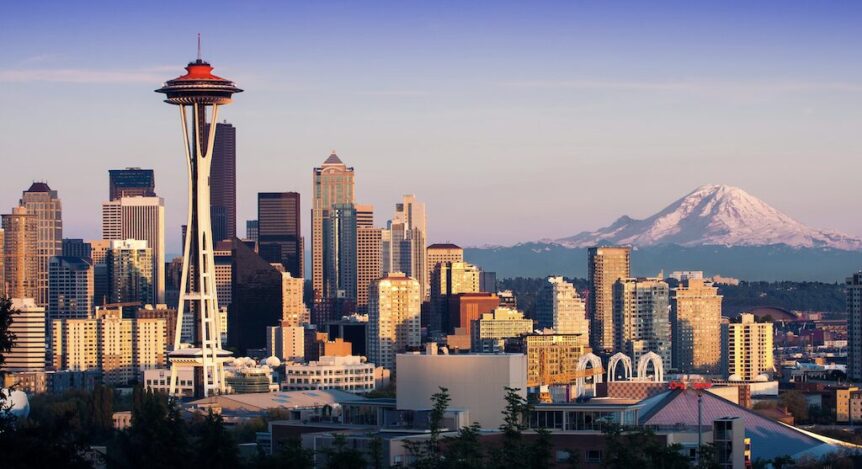
Why Seattle Basements Leak More Than Other Cities
If you live in Seattle, Redmond, Bellevue, Kirkland, or anywhere in the greater Puget Sound region, you have probably noticed that basement water problems seem far more common here than in other parts of the country. Drive through any Seattle neighborhood and you will find multiple homes dealing with wet basements, mold growth, and moisture issues that homeowners in drier climates rarely encounter.
This is not coincidence or bad luck. Seattle basements leak more than basements in most other American cities because of a unique combination of climate, geology, and construction factors that create perfect conditions for water intrusion. Understanding why Seattle presents such challenging conditions helps explain why proper basement waterproofing is not optional here but essential for protecting your home and your family’s health.
Seattle’s Relentless Rainfall Creates Constant Pressure
The most obvious factor contributing to Seattle basement leaks is our climate. According to National Weather Service data, Seattle receives approximately 39 inches of precipitation annually. While this total rainfall is not dramatically higher than many Eastern cities, the pattern of rainfall makes all the difference.
Seattle experiences rain on roughly 150 days per year. Rather than receiving our annual rainfall in intense storms separated by long dry periods, we get persistent drizzle and steady rain for months at a time. From October through May, the Pacific Northwest sits under nearly constant cloud cover with frequent precipitation. This relentless moisture saturates the soil around foundations and maintains high groundwater levels for extended periods.
When soil stays saturated for weeks or months, water has continuous opportunity to find pathways into basements. Every crack, every porous section of concrete, every imperfect joint between wall and floor becomes a potential entry point. The longer soil remains wet, the more water accumulates and the greater the hydrostatic pressure pressing against foundation walls and basement floors.
Cities with similar annual rainfall totals but different precipitation patterns experience far fewer basement problems. A city that receives 40 inches of rain in intense summer thunderstorms has dry soil most of the year. The soil drains between storms, groundwater levels drop, and hydrostatic pressure dissipates. Seattle’s gentle but constant rain never allows this drainage and recovery cycle to occur during our wet season.
The moderate temperatures in Seattle compound this problem. We rarely experience the deep freezing that occurs in colder climates. While harsh winters create their own foundation challenges, frozen soil is impermeable and prevents water movement. Seattle’s soil never freezes, so water continues moving through the ground and seeking entry into basements even during winter months.
Topography and Drainage Challenges
Seattle’s hilly topography creates additional water management challenges that contribute to basement leaks. The city is built on a series of steep hills separated by valleys and waterways. This terrain means many homes sit on slopes where surface water naturally flows downhill toward lower elevations.
Homes built on hillsides experience constant water movement through the soil. Rain falling uphill from your foundation flows down through the ground and accumulates against basement walls. Even if your own property has proper grading, water from neighboring properties uphill can travel through the soil and create pressure against your foundation.
The glacial activity that shaped Puget Sound geography left behind complex subsurface drainage patterns. Ancient stream channels, gravel deposits, and clay layers direct groundwater movement in ways that are not always obvious from surface features. Your basement might be located directly in the path of a subsurface water flow that was established thousands of years ago by glacial melt.
Seattle’s urban development has dramatically increased impervious surfaces throughout the region. Pavement, rooftops, driveways, and other hard surfaces prevent rainwater from soaking into the ground where it falls. Instead, this water runs off into storm drains or flows across the surface to lower elevations where it infiltrates the soil. Neighborhoods with heavy development often experience higher groundwater levels than the same areas had before construction because of this concentrated runoff.
Glacial Geology Creates the Clay Bowl Effect
Perhaps the most significant factor making Seattle basements uniquely vulnerable is the glacial geology underlying the entire region. During the last ice age, massive glaciers advanced and retreated across Puget Sound multiple times. These glaciers left behind specific soil deposits that create serious challenges for basement waterproofing.
The Vashon Glaciation, the most recent glacial advance approximately 15,000 years ago, deposited thick layers of glacial till across the Seattle area. According to research by the United States Geological Survey, this glacial till consists of a dense mixture of clay, silt, sand, gravel, and boulders that was compressed under thousands of feet of ice.
This glacial till has very poor drainage characteristics. The dense clay content causes the soil to hold water rather than allowing it to percolate downward. When glacial till becomes saturated, it remains wet for extended periods because water cannot drain through the impermeable clay layers.
Beneath the glacial till in many areas lies the Esperance Sand, a layer of sand and gravel deposited before the last glaciation. This layer is highly permeable and often carries significant groundwater flow. The combination of permeable sand below and impermeable clay above creates a trapped water table that presses upward against basement floors.
The Lawton Clay, another glacial deposit found throughout Seattle, creates additional drainage problems. This extremely fine-grained clay is nearly impermeable when compacted. Properties with Lawton Clay in their foundation excavation often experience severe water problems because the clay acts as a barrier that prevents drainage in all directions.
When foundations are excavated for construction, the original soil structure is disturbed. After basement walls are built, the excavation is backfilled with the same glacial till that was removed. This backfill soil is looser and more permeable than the undisturbed soil surrounding it. Water moving through the ground naturally flows toward this more permeable zone, concentrating groundwater directly against basement walls.
This phenomenon creates what we call the clay bowl effect. The excavation and backfill around your foundation forms a bowl-shaped depression in the otherwise dense clay soil. This bowl collects and holds water like a bathtub, keeping your foundation walls constantly surrounded by saturated soil.
High Water Table Throughout the Region
Much of the Seattle area has a naturally high water table due to our proximity to Puget Sound, the numerous lakes throughout the region, and the constant rainfall that recharges groundwater. A high water table means the level where soil becomes completely saturated with water is relatively close to the surface.
In neighborhoods near water bodies like Lake Washington, Green Lake, or Puget Sound itself, the water table often sits just a few feet below the surface. Basements dug into this high water table are essentially underground pools surrounded by saturated soil. Water constantly attempts to equalize pressure by flowing into the basement through any available opening.
Seasonal variations in the water table create additional challenges. During Seattle’s dry summer months, the water table drops as vegetation consumes groundwater and evaporation removes moisture from the soil. When fall rains begin, the water table rises rapidly. This seasonal fluctuation creates cycles of expansion and contraction in clay soils that can open cracks in foundations and create new pathways for water entry.
Areas that were historically wetlands, stream corridors, or lake beds present extreme water table challenges. Much of Seattle’s development occurred on filled wetlands and reclaimed land. These areas often have water tables that rise to within inches of the surface during wet periods, making basement construction extremely difficult without comprehensive waterproofing systems.
Construction Practices and Aging Infrastructure
Many Seattle homes were built during periods when basement waterproofing technology was primitive or nonexistent. Homes constructed in the early to mid 1900s often have no waterproofing whatsoever beyond the concrete foundation walls themselves. These older foundations relied on concrete to keep water out, but concrete is actually quite porous and allows significant water penetration over time.
The post-World War II housing boom in Seattle saw rapid development of neighborhoods throughout the region. Speed of construction often took priority over long term water management. Foundations were poured, backfilled, and covered without the waterproofing membranes, drainage systems, and moisture barriers that modern building codes require.
Even homes built with original waterproofing systems now face failures as these systems age. Tar-based waterproofing coatings applied to foundation exteriors deteriorate after 30 to 50 years. Original footing drains installed around older homes become clogged with sediment, roots, and mineral deposits, losing their ability to drain water away from foundations.
Foundation settlement and soil movement over decades creates cracks in basement walls and floors. Seattle’s seismic activity, while not as severe as regions closer to major fault lines, still produces enough ground movement to stress foundations and create new openings for water entry. Even small earthquakes that cause no visible damage can create hairline cracks that allow water intrusion.
The clay soils discussed earlier expand when wet and shrink when dry. This constant expansion and contraction cycle stresses foundation walls and can cause structural movement that opens gaps and cracks. Older homes that have experienced decades of this soil movement often develop extensive cracking that allows significant water penetration.
Poor Original Drainage Design
Many older Seattle homes were built with inadequate site drainage that directs water toward foundations rather than away from them. Original lot grading may have been suitable when the home was new, but landscaping changes, settling, and adjacent development have altered drainage patterns over the years.
Ineffective gutters and downspouts contribute significantly to basement water problems. When gutters are clogged or missing, roof runoff pours directly into the soil next to the foundation. A typical Seattle roof collects thousands of gallons of water during the rainy season. Dumping all this water adjacent to the foundation overwhelms soil drainage capacity and creates localized flooding conditions right against basement walls.
Downspouts that discharge too close to foundations create similar problems. Even functional gutters fail to protect basements if downspouts empty water within a few feet of foundation walls. The concentrated flow from downspouts saturates soil faster than it can drain away, creating high moisture zones and increased hydrostatic pressure.
Original foundation drainage systems, when they exist at all, often consist of clay tile pipes that crack and separate over time. These old footing drains become clogged or collapse, leaving foundations without any subsurface drainage. Modern homes are built with perforated plastic drainage pipes and gravel beds, but retrofitting these systems around existing foundations requires significant excavation.
The Combined Effect Creates Perfect Conditions
No single factor alone makes Seattle basements leak. Rather, the combination of constant rainfall, poor-draining glacial soils, high water tables, hilly terrain, older construction practices, and inadequate drainage creates a perfect storm of conditions that overwhelm basement waterproofing.
The persistent rain saturates the glacial clay soils that cannot drain effectively. The clay bowl effect concentrates this water around foundations. The high water table provides a constant source of groundwater pressure. The hilly terrain directs surface water and subsurface flow toward lower elevations where many homes sit. Aging foundations with deteriorated waterproofing and clogged drains cannot resist the constant moisture pressure.
These conditions explain why temporary fixes rarely work in Seattle basements. Sealing a crack might stop visible water for a while, but it does not address the underlying hydrostatic pressure. Water simply finds a new path into the basement through a different crack or porous section. Surface treatments and interior sealants cannot withstand the constant pressure created by saturated clay soils and high water tables.
Why Professional Waterproofing Is Essential
Given these unique and challenging conditions, Seattle homeowners need waterproofing solutions specifically engineered for Pacific Northwest geology and climate. Generic approaches that work in other regions often fail here because they do not adequately address the specific challenges of glacial soils, high water tables, and persistent rainfall.
Effective basement waterproofing in Seattle requires systems that eliminate hydrostatic pressure rather than merely resisting it. This means providing comprehensive drainage that removes water from around and beneath foundations before it can accumulate and create pressure. Interior waterproofing systems that capture water at the footing level and drain it continuously to sump basins provide the most reliable protection.
Professional waterproofing also addresses the mold and health risks created by basement moisture. The same damp conditions that allow water intrusion also support rapid mold growth that can cause serious health problems. Comprehensive solutions must address both water control and mold prevention to create truly healthy basements.
At Wet Basement Services, we have spent decades solving basement water problems throughout the Seattle area. We understand the unique combination of factors that make our region so challenging. Our proprietary EWA System is specifically designed to address glacial soils, high water tables, and constant rainfall through comprehensive drainage that desaturates soils and eliminates hydrostatic pressure.
We have successfully waterproofed thousands of Seattle area basements in every neighborhood, every soil type, and every foundation age. We know firsthand how these geological and climatological factors interact to create water problems. Our solutions address the root causes rather than just managing symptoms.
Common Signs Your Seattle Basement Is Leaking
Understanding why Seattle basements leak helps you recognize the warning signs before minor moisture problems become major flooding events. Watch for these indicators:
Musty basement smells indicate moisture is present even if you do not see standing water. That distinctive damp, earthy odor comes from mold and mildew growing in humid conditions.
Wet walls or damp spots on foundation walls show water is penetrating through porous concrete or through cracks. The water may be visible as wet patches or may show up as darker discoloration.
Efflorescence, the white powdery residue that appears on concrete, indicates water is moving through the concrete and depositing minerals on the surface. This white coating is a clear sign of ongoing moisture penetration.
Basement wall cracks provide pathways for water entry. Even hairline cracks can allow significant water intrusion when hydrostatic pressure is high.
Water in cold joints where walls meet floors is extremely common in Seattle basements. This joint is often the first place water appears because it represents a natural weak point in foundation waterproofing.
If you notice any of these signs, addressing the problem promptly prevents minor moisture issues from becoming severe water damage and extensive mold contamination.
Protecting Your Seattle Home
Living in Seattle means accepting that basement water problems are not a matter of if but when. The geological and climatological factors that make our region beautiful also make basement waterproofing essential rather than optional.
Do not wait until you experience flooding to address basement water issues. Proactive waterproofing protects your home’s value, prevents costly water damage, eliminates health risks from mold, and gives you peace of mind during Seattle’s long rainy season.
Professional assessment by experienced waterproofing specialists who understand Seattle’s unique conditions is the first step. At Wet Basement Services, we provide free inspections that identify your specific water intrusion risks and recommend solutions tailored to your foundation type, soil conditions, and site drainage.
Our comprehensive approach addresses all the factors that cause Seattle basements to leak. We eliminate hydrostatic pressure through proper drainage, we control mold through moisture management, and we provide permanent protection backed by our lifetime warranty.
Contact Wet Basement Services today to schedule your free basement inspection and discover why thousands of Seattle area homeowners trust us to keep their basements dry in one of the most challenging waterproofing environments in the country.