
Case Study: Bellevue (Somerset) Rental – Multi-Path Waterproofing + Condition 3 Mold Remediation After Main Water Line Break
Client: Andy L. | Property: 1962 Single-Family Rental with Finished Basement ADU (Mother-in-Law Apartment) | Somerset, Bellevue, WA
Timeline: December 2021 – March 2022 | Major escalation event: Main water line break on January 17, 2022 (several blocks uphill)
Overview
This Somerset rental in Bellevue sits above Lake Washington with expansive views toward the Olympic Mountains—but the site conditions below the beauty were not forgiving. During the 2021–2022 wet season, the property’s finished basement mother-in-law apartment experienced severe water intrusion and high humidity. The situation escalated dramatically after a major main water line break several blocks uphill (January 17, 2022), dumping additional water into an already saturated hillside system.
The unit was tenant-occupied at the beginning of the event. The water intrusion progressed from seepage to active entry through cracks and the cold joint, leading to Condition 3 mold growth and a tenant hardship situation. Our work required a robust, multi-path solution: interior pressure relief, exterior drainage corrections, and targeted capture at the rockery where water was literally gushing from beneath the structure.
Project Snapshot
- Service: Comprehensive waterproofing (interior + exterior + rockery source control) + Condition 3 mold remediation
- Location: Somerset neighborhood, Bellevue, WA
- Property: 1962 rental home with finished daylight-basement ADU (mother-in-law apartment)
- Foundation: Poured concrete; daylight basement; limited exterior access via paths supported by rockery
- Timeline: December 2021 – March 2022
- Primary issues observed: Cracks, efflorescence, standing water mid-apartment, cold joint seepage, musty odor, visible mold growth
- Key constraints: Tenant-occupied initially; finished basement; difficult access along rockery-supported paths
- Soils / site conditions: Compacted glacial till (dense clay mixed with rocks); hillside hydrology
- System installed: Interior footing drain + 30-gallon catch basin + 1 HP sump pump + battery backup; gravity drain across apartment tied into stormwater; exterior footing drain replacement where dysfunctional; curtain drains at rockery tied to 50-gallon dry well with 1 HP pump; discharge day-lighted to on-site stormwater catch basin
- Outcome: Water finally controlled (interior, exterior, and rockery source); mold remediation completed successfully; unit stabilized for rebuild and re-occupancy
- Warranty: Lifetime transferable warranty on interior drainage scope
The Problem
The house was built in 1962. After the initial atmospheric river conditions, the owner noticed seepage into the finished apartment, but—like many owners—tried to manage it with basic DIY steps (vacuuming water, running dehumidifiers, and monitoring). Unfortunately, the moisture load was not a temporary nuisance. It was a pressure-and-volume problem.
Soon after, active water began entering through a crack on the east side of the foundation, flowing into the kitchen area and adjacent bedroom. The tenant (a family with four children) was understandably upset. The situation impacted habitability, and the tenant pursued early lease termination, which the owner granted.
Diagnosis (Root Cause)
This project had two compounding drivers—one seasonal and one sudden and catastrophic:
- Soil and hydrology: Compacted glacial till (dense clay mixed with rocks) drains poorly and holds water against foundations. During atmospheric river events, the local water table can rise rapidly and remain elevated.
- Initial trigger: An extremely high water table during the 2021–2022 atmospheric river period created elevated hydrostatic pressure against the foundation and under the slab.
- Major escalation on January 17, 2022: A serious main water line break several blocks uphill added a tremendous volume of water into an already pressurized hillside system. The hydrology changed in real time—water flowed downslope and the property experienced additional intrusion pathways, including at the exterior rockery (approximately 10 feet tall) buttressing the house. Media coverage (links below).
- Building pathways: Water entered through multiple points—foundation wall cracks, slab cracks, and the cold joint—plus under-slab percolation that produced standing water in the middle of the apartment.
- IAQ impact: The north wall and part of the interior wall separating the kitchen from the bedroom developed Condition 3 mold growth due to sustained wetting of assemblies and organic substrates.
When water pressure and volume are high enough, single-strategy fixes fail. You have to intercept water where it is coming from, relieve pressure under the slab, and create reliable discharge pathways.
Media Coverage (January 17, 2022 Somerset landslide / water main break)
This incident was widely documented by local agencies and regional news outlets. These references help illustrate the scale of the event that added water to the hillside system:
- City of Bellevue – Somerset Landslide (official incident page): https://bellevuewa.gov/city-government/departments/fire/emergency-management/prepare-known-hazards/landslides/somerset-slide
- City of Bellevue – Slide update (legal action / site secured): https://bellevuewa.gov/city-news/slide-update-city-takes-legal-action-secure-dangerous-site
- City of Bellevue – Somerset Slide Structural Report (PDF, Jan 27, 2022): https://bellevuewa.gov/sites/default/files/media/pdf_document/2022/Somerset-Slide-Structural-Report.pdf
- KING 5 – House slides off foundation after water main break (Jan 17, 2022): https://www.king5.com/article/news/local/bellevue/bellevue-water-main-break-house-collapse/281-6feff27c-c57b-4808-a460-1a120fac4427
- KING 5 – Video: Home collapses after water main break; rescues (Jan 2022): https://www.king5.com/video/news/local/bellevue/home-collapses-after-water-main-break-in-bellevue-2-people-rescued/281-a31fa39c-13c9-4bff-85cf-2f7cf5ad10b5
- KIRO 7 – 17 homes evacuated after collapse (Jan 18, 2022): https://www.kiro7.com/news/local/home-slides-off-foundation-collapses-during-bellevue-water-main-break/YVH5DGCZO5CAPJXFTXAAZGL75U/
- KIRO 7 – Photo gallery (Jan 17, 2022): https://www.kiro7.com/news/photos-bellevue-home/F6DYHZT4NFGYFDE6KUPRS3W3CU/
- FOX 13 Seattle – Investigators review water main after collapse (Jan 19, 2022): https://www.fox13seattle.com/news/investigators-will-review-age-condition-and-composition-of-water-main-that-broke-in-bellevue
KOMO News – Demolition agreement after collapse (Feb 4, 2022): https://komonews.com/news/local/bellevue-officials-say-deal-reached-to-demolish-partially-collapsed-home
Permanent Solution
We started with the correct fundamentals—relieve hydrostatic pressure at footing level and provide gravity drainage where possible—then scaled the system when the site conditions changed.
The final solution combined four coordinated layers:
- Interior footing-level pressure relief with a properly sized catch basin and high-capacity sump system (plus battery backup).
- A cross-apartment interior drain to relieve pressure build-up under the floor slab (connected by gravity into stormwater infrastructure).
- Exterior drainage correction where the existing footing drain was found dysfunctional and contributing to saturation along the west wall.
- Rockery source control using curtain drains feeding a dedicated dry well with a high-capacity pump to capture the gushing water source and move it into the stormwater system.
This was not a single “product” fix. It was a hydrology-based design: capture, relieve, convey, and discharge—reliably and redundantly.
Installation
Containment + Mold Remediation Prep
-
Installed containment and dust control per industry standards for Condition 3 contamination.
-
Removed impacted sheetrock, sill plates, and selective stud sections where materials were compromised.
-
Performed detailed cleaning and HEPA vacuuming of affected assemblies prior to rebuild.
Active Water Control (During Construction)
-
Installed temporary pumps and managed active inflow entering through foundation cracks and from beneath the footing to keep the work area controlled and safe.
Interior Drainage + Pressure Relief
-
Cut concrete along interior foundation walls (controlled cuts) and removed slab sections to access the footing line.
-
Excavated perimeter trenches with proper slope to collection points.
-
Installed 4-inch perforated PVC drain pipe with anti-clog geotextile fabric and free-draining gravel.
-
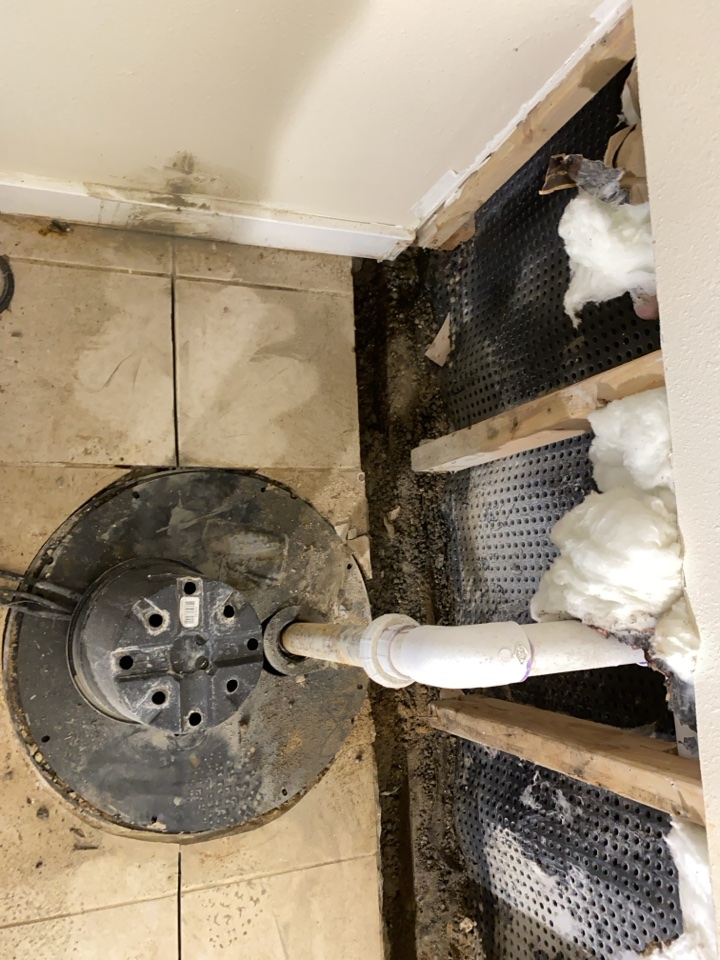
Installed an interior 30-gallon catch basin and connected drain laterals to the basin.
-
Installed an additional interior drain across the apartment to relieve hydrostatic pressure under the slab; tied by gravity into stormwater drainage.
-
Installed drainage mats (J-Drain / Delta Drain / MiraDrain class) on stem walls and connected the wall drainage plane into the footing drain system.
-
Backfilled trenches with washed drain rock and restored slab with approximately 4-inch concrete, finished level with the existing basement floor.
Sump System + Discharge
-
Installed a 1 HP sump pump with battery backup system for redundancy (power outage + pump failure scenarios).
-
Connected discharge piping to the on-site stormwater catch basin / storm drain infrastructure for reliable conveyance away from the building.
Exterior Footing Drain + Rockery Source Control
-
Evaluated the existing exterior footing drain on the west wall, determined it was dysfunctional, and replaced it with new 4-inch PVC pipe wrapped in filter fabric with washed gravel.
-
Installed exterior wall drainage protection (J-Drain / drainage mat) on stem walls to reduce seepage and route water into drainage paths.
-
Addressed the extreme water source at the rockery with curtain drains using 6-inch PVC pipe connected to a ~50-gallon dry well.
-
Installed a 1 HP pump in the dry well with automatic float control; day-lighted discharge to the same stormwater system to remove captured water volume efficiently.
Installed additional west-wall interior drainage where leakage through the cold joint was present; tied into the interior catch basin system.
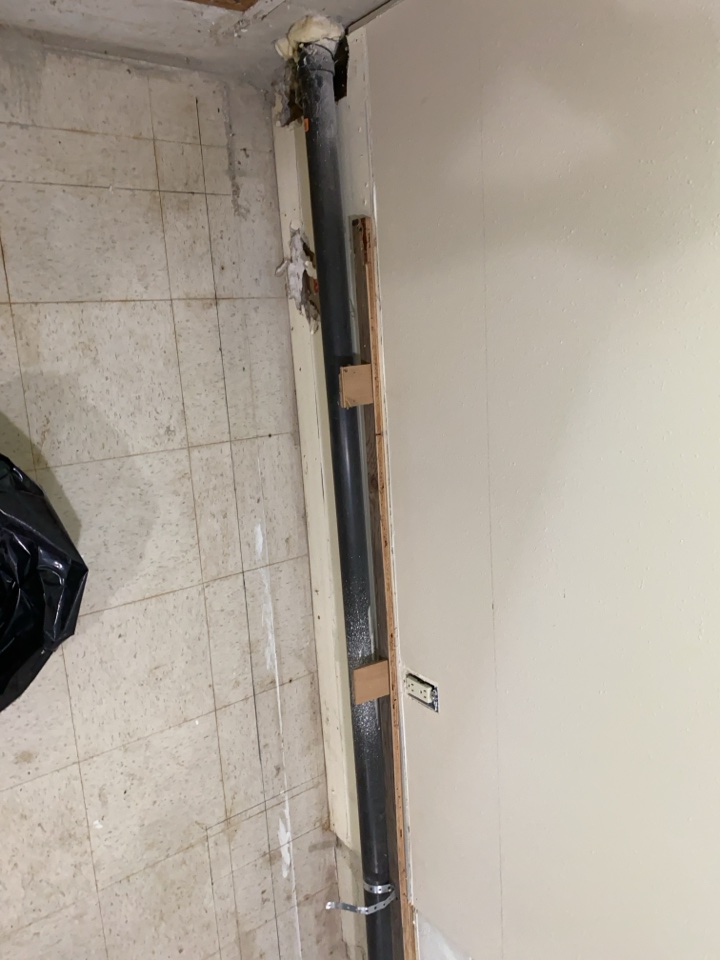
Before
After
Results
This project occurred during extreme conditions: atmospheric river patterns and a rare, high-impact water main failure uphill that changed the site hydrology. Before installation, the apartment recorded very high humidity (approximately 90%) with active water intrusion through multiple entry points—wall cracks, slab cracks, and the cold joint—plus standing water developing mid-floor from under-slab percolation.
- Condition 3 mold growth was extensive on the north wall and portions of the interior wall by the kitchen/bedroom separation.
- The exterior leak source at the rockery was measured at approximately 5 gallons per minute.
- After implementing interior pressure relief, exterior corrections, and dedicated rockery source capture, the property has been through multiple high-water-table seasons and subsequent atmospheric river events without recurring intrusion issues.
Once the waterproofing system stabilized the structure and the moisture source was controlled, mold remediation and rebuild could proceed correctly—without chasing symptoms.
Warranty, Maintenance, and Next Steps
This client received our lifetime transferable warranty on the interior drainage scope (consistent with our interior drainage projects). Because the system includes a high-capacity pump and a battery backup package, it also includes practical monitoring and serviceability.
Recommended maintenance and monitoring:
- Battery backup system monitors the main pump, auxiliary pump, and battery condition; address alerts proactively.
- Seasonal functional tests (especially before wet season): verify pump operation, floats, alarms, and discharge flow.
- Keep discharge pathways clear and confirm stormwater tie-in remains unobstructed.
- If the property undergoes future landscaping or drainage changes, re-evaluate surface water routing to avoid reloading the hillside system.
FAQ
Why did the apartment flood after a water main break that happened blocks away?
On a hillside with dense clay soils, large volumes of added water can travel downslope through preferential pathways and saturated horizons. If the foundation is already under hydrostatic pressure, that extra volume can turn seepage into active intrusion through cracks, the cold joint, and under-slab pathways.
Why was there standing water in the middle of the floor?
That’s a classic under-slab pressure signal. Water can percolate beneath the slab and express upward through slab cracks and weak points, especially when the water table rises and pressure increases.
Why not just seal the cracks?
Crack sealing can be part of a repair, but it doesn’t relieve hydrostatic pressure. If pressure remains, water will find another path. Drainage and pressure relief are the foundation of a permanent solution.
Why did you install both gravity drainage and sump pumps?
Gravity drainage is reliable when it’s available, but extreme conditions can overwhelm gravity-only systems. Pumps provide controlled capacity and redundancy—especially when the site hydrology changes suddenly.
What makes Condition 3 mold different?
Condition 3 indicates actual growth and contamination. It requires controlled removal of impacted materials, containment, and detailed cleaning. It’s not a cosmetic wipe-down problem.
Call to Action
If your finished basement is taking on water—especially on a hillside—don’t wait until seepage becomes a tenant emergency or a mold problem. The permanent fix is pressure control and dependable drainage capacity.
Schedule a Free Professional Inspection: 425-877-0845
Schedule Your Free Inspection and Quote